


 +91-85588-96644


Call Support +91-85588-96644


| Choose Exam Category |

When the history of test preparation is rewritten in the age of artificial intelligence, it may not describe teachers being replaced but redefined. The real shift is not technological; it is human. AI is quietly expanding what it means to teach, to guide, and to understand how learning truly happens.
Expertise and Effort: From Explaining to Orchestrating
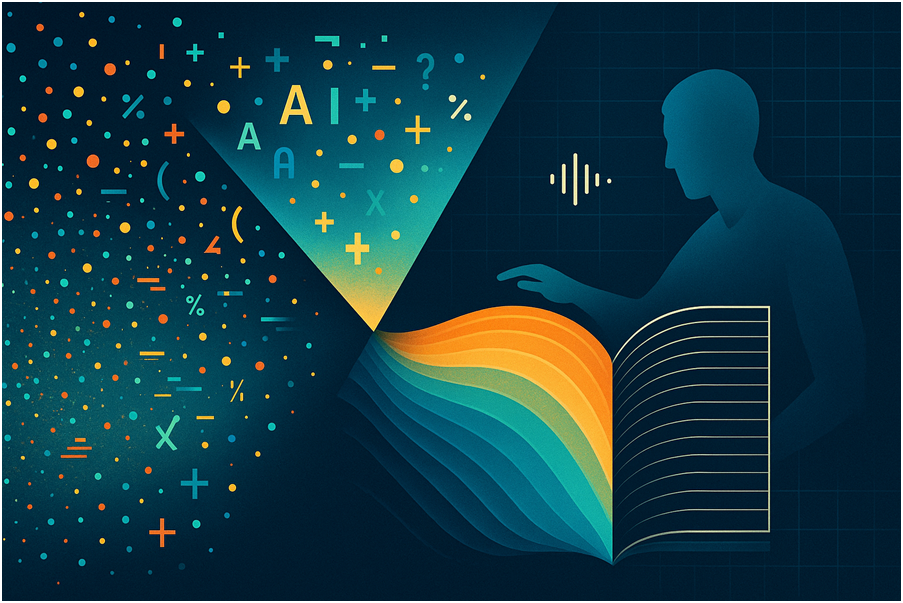
In traditional coaching, mastery meant recall. The finest faculty were those who knew every shortcut in quantitative aptitude or every rule in IELTS writing. AI now explains all of that instantly and endlessly. Yet human expertise has never been about speed; it is about timing, judgement, and empathy, qualities no system can replicate.
The best teachers read the room the way a conductor reads tempo, sensing when confusion helps and when it hurts, when to let a student struggle and when to step in. Their work is orchestration, not repetition.
The same evolution is redefining effort. It no longer means longer hours or thicker worksheets. AI can automate tasks, but it cannot decide what truly matters. The teacher's effort now lies in turning chaos into coherence, choosing the signal within the noise, and shaping order from abundance. The hardest work remains human, deciding what to hold back so that learning retains rhythm and meaning.
Evidence and Feedback: From Scores to Stories
Scores once looked final. They marked the end of learning. Now AI reveals what happens between them: the pause before an answer, the hesitation that fades with practice, the recovery after an error. These traces show thought in motion.
A student's percentile may not move, yet their reasoning grows steadier. The teacher who reads those subtleties sees progress others miss. They trace not just performance but pattern, turning raw data into a narrative of growth.
Feedback, too, is evolving. Machines can mark errors, but teachers make sense of them. The goal is not speed but awareness, that quiet moment when a learner anticipates a mistake before it happens. That is not automation; it is mentorship at its finest.
Design and Direction: Keeping Friction, Restoring Time
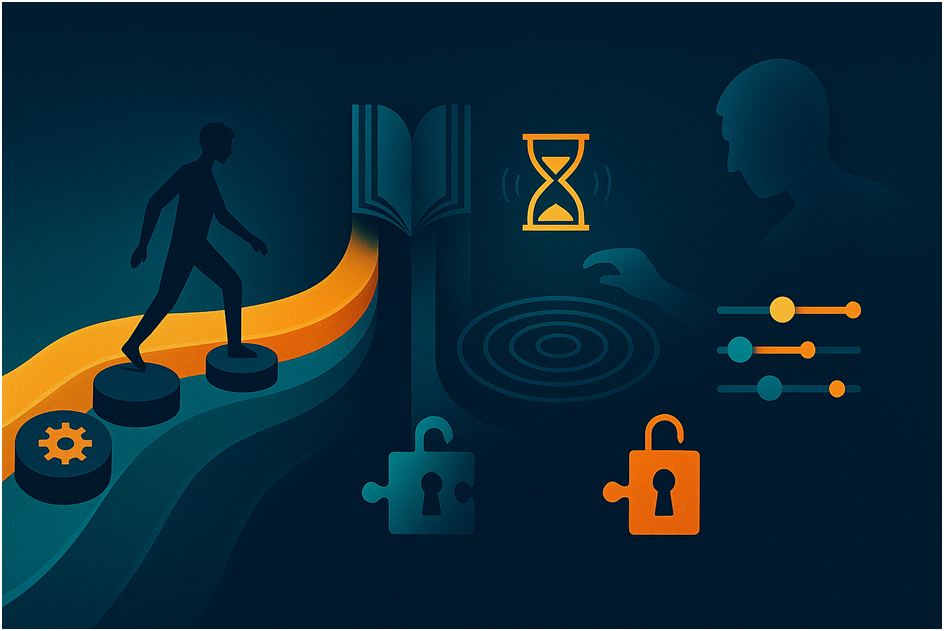
AI promises seamless learning, yet smoothness often dulls curiosity. Great teachers understand that small, intentional difficulties strengthen memory and deepen engagement. They know when to introduce friction, such as a tougher passage, a delayed hint, or a reflective pause, to make insight truly earned.
They also know when to slow the system down. Instant analytics compress reflection into reaction. A wise teacher restores breathing space, turning pauses into tools for thinking. Even in an era of immediacy, it is the human sense of pacing that gives learning its depth.
Authority and Purpose: From Knowledge to Interpretation
When both teacher and student can consult the same AI, authority no longer rests on information alone. It rests on interpretation. The trusted teacher is the one who explains why the algorithm responded a certain way, how to question its logic, and how to turn data into action. They cultivate discernment, the ability to judge truth amid precision. Their power is not reduced; it is refined.
The New Classroom
A test-prep institute is no longer defined by schedules and syllabi. It now functions as a learning ecosystem where every click, question, and insight shapes the next step.The teacher's role is expanding from delivery to design. They manage the rhythm of practice, the balance between challenge and relief, and the moments when silence teaches more than another hint. The finest teachers create conditions in which learning continues on its own. Their presence is felt not in the number of lectures but in what follows them, when students recover faster from failure, recognize their own blind spots, and start asking stronger questions. That is not the decline of teaching; it is its highest expression.AI can teach content, but only a teacher can teach thinking.
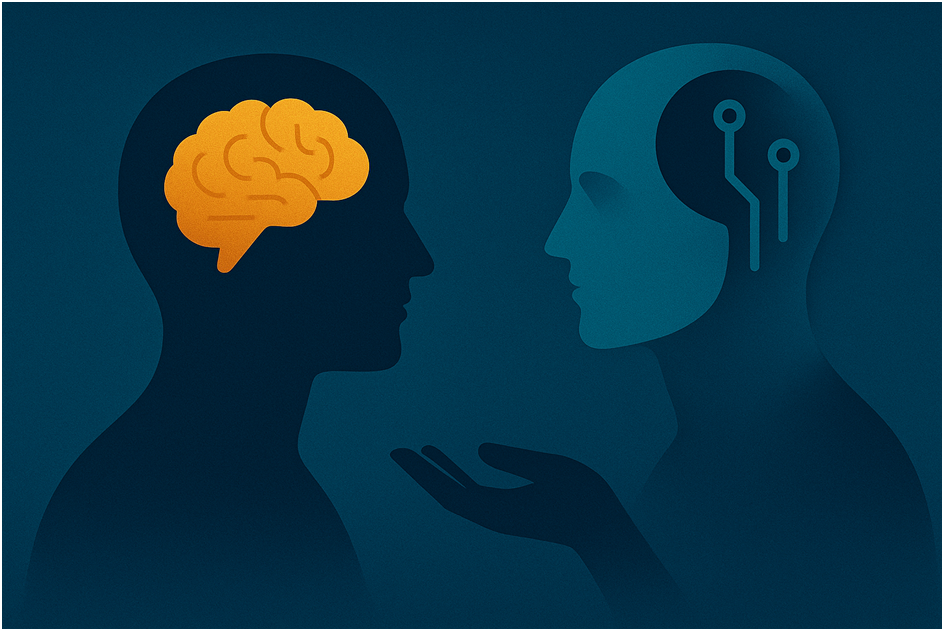
The invisible teacher is not fading from the classroom. They are becoming its unseen foundation, the mind that makes intelligence, whether human or artificial, serve understanding.
To stay relevant in this changing world, teachers must see themselves not as competitors to technology but as its interpreters. Their value lies in connecting data with judgment, efficiency with empathy, and speed with reflection. As AI reshapes how students learn, it is the teacher who will continue to shape why they learn.


