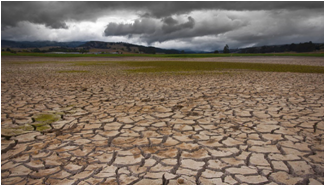
Researchers have found that climate change harmed nearly half of endangered land mammals and a quarter of birds.
As per reports, endangered primates and elephants are among the groups squeezed the hardest by global warming. It is because they reproduce slowly and take longer to adapt to rapid environmental changes.
While most studies seek to predict global warming's future impact on animal survival, the new analysis states that for "large numbers" of threatened species, the damage was already being done.
Feb 11, 2017
Methane Levels in Marcellus Shale Region
Despite a slowdown in the number of new natural gas wells in the Marcellus Shale region of Northeast Pennsylvania, new research finds that atmospheric methane levels in the area are still increasing. Measurements of methane and other air pollutants taken three years apart in the rural areas of Pennsylvania that have been the target of natural gas development over the last decade have revealed a substantial increase from 2012 to 2015.
Feb 10, 2017
Power from Renewable Sources
Renewable energy sources made up nearly nine-tenths of new power added to Europe’s electricity grids last year, in a sign of the continent’s rapid shift away from fossil fuels.
Of the 24.5GW of new capacity built across the EU in 2016, 21.1GW or 86% was from wind, solar, biomass and hydro.
Feb 08, 2017
Britain’s Most Significant Sites are Ruining
As per reports, climate change is wrecking some of Britain’s most significant sites, from Wordsworth’s Gardens in Cumbria to the White Cliffs on England’s south coast.
Floods and erosion are damaging historic places, while warmer temperatures are seeing salmon vanishing from famous rivers and birds no longer visiting important wetlands.
Feb 05, 2017
12th Century Sculptures
Several ancient sculptures have been unearthed from an archaeological site in Bijbehara area of south Kashmir’s Anantnag district.
The artefacts, belonging to the Kashmir school of sculpture, have been taken to SPS Museum here for preservation.
More findings are expected from the archaeologically rich area.